
Soil Remediation
Biodegradable Soil Remediation Concentrate Proven Soil Remediation Solution on Projects in Texas and Louisiana
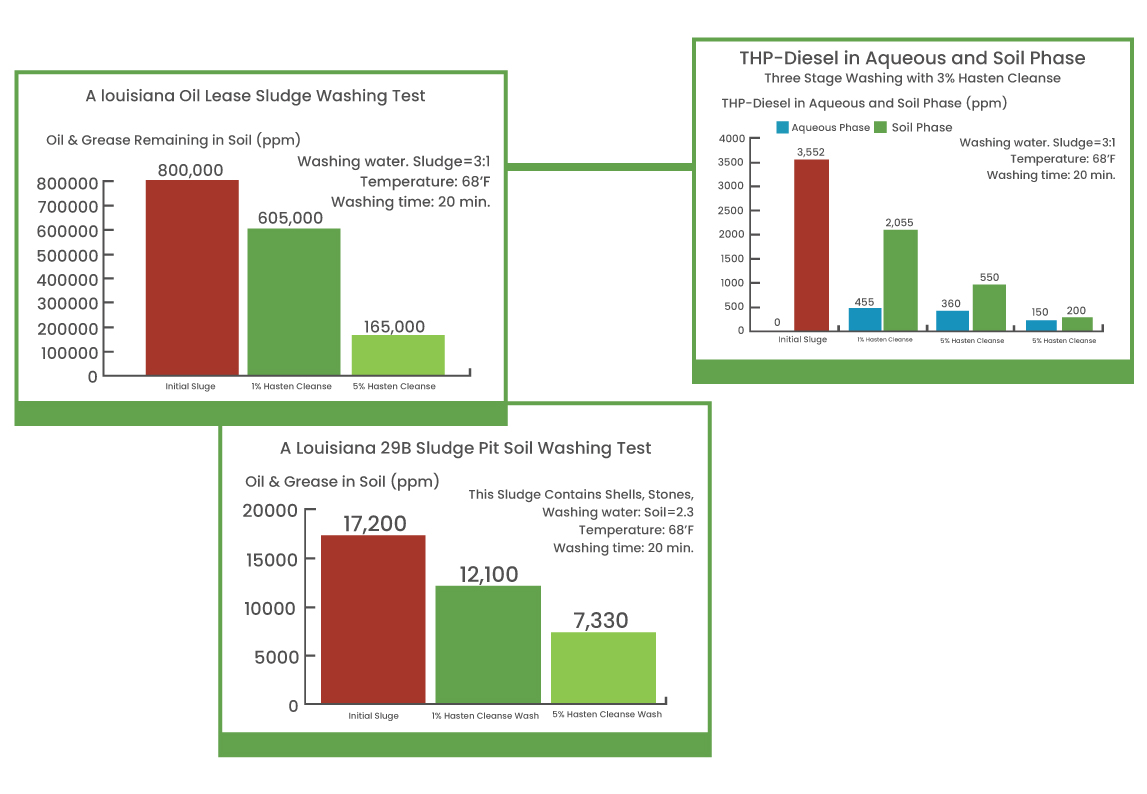
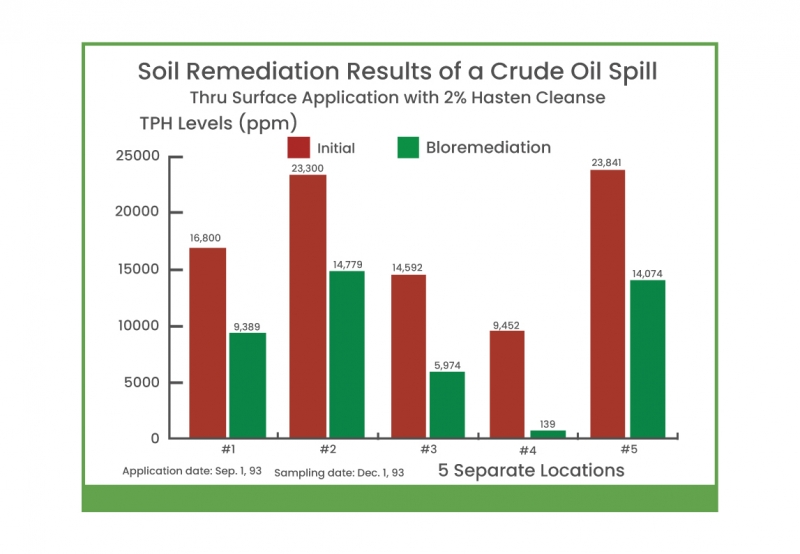
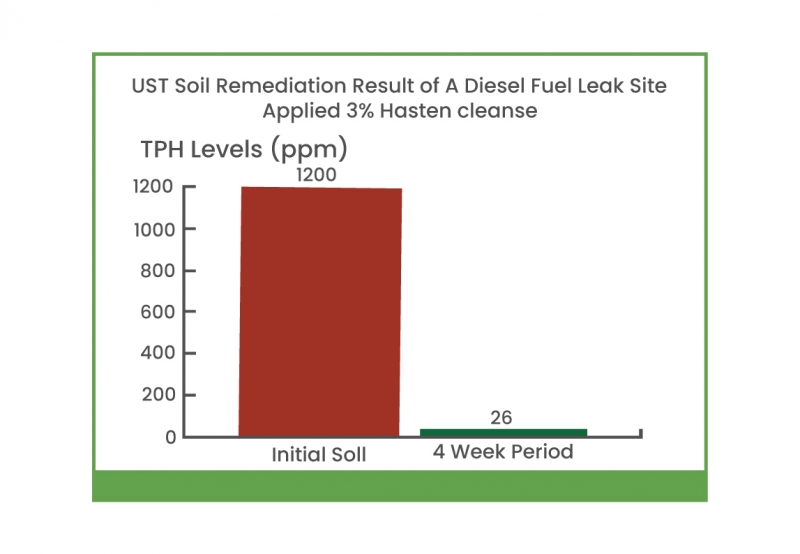
How Soil Remediation Works with Hasten Cleanse
Hydrocarbon-contaminated soil presents a persistent environmental and regulatory challenge. Traditional remediation methods, excavation and offsite disposal, thermal treatment, or chemical oxidation, are expensive, disruptive, and often generate secondary waste streams.
Hasten Cleanse offers a different approach. When applied to contaminated soil in a pre-determined dilution, the surfactant chemistry breaks the bond between hydrocarbon contaminants and soil particles. This does two things simultaneously
- MobilizationHydrocarbons are released from the soil matrix, allowing them to be flushed, extracted, or naturally degraded in place
- Enhanced bioremediationThe fatty acid components in Hasten Cleanse provide a nutrient source for naturally occurring hydrocarbon-degrading microbes, accelerating the biological breakdown of contaminants like benzene, toluene, and xylene
Unlike chemical dispersants that can drive contaminants deeper into the soil column toward the water table, Hasten Cleanse in controlled application does not enhance hydrocarbon migration. The chemistry is readily biodegradable and poses no environmental threat from the treatment itself.
Common Soil Remediation Scenarios
- Wellsite pad remediationProduced water releases, crude oil spills, and drilling fluid contamination on active and abandoned well pads throughout Texas and Louisiana
- Tank farm soil contaminationYears of small leaks, overfills, and transfer spills accumulate in the soil beneath and around storage tanks. Hasten Cleanse treats this contamination in-situ without requiring full tank removal.
- Pipeline right-of-way cleanupLine breaks and slow leaks contaminate soil along pipeline corridors. Our chemistry can be applied along the affected area and worked into the soil for in-place treatment.
- Refinery and plant decommissioningDecades of operations leave hydrocarbon contamination in soils that must be remediated before property transfer or redevelopment.
- Transportation spill sitesTruck accidents, railcar derailments, and loading dock spills that contaminate roadside and facility soils.
Regulatory Compliance
Soil remediation projects in Texas are regulated by the TCEQ (Texas Commission on Environmental Quality) under programs including the Voluntary Cleanup Program (VCP), Petroleum Storage Tank (PST) program, and Industrial and Hazardous Waste programs. Louisiana projects fall under LDEQ oversight.
Using a non-hazardous, TSCA-compliant, biodegradable remediation product simplifies your regulatory posture in several ways
- No hazardous materials handling requirements for the treatment chemical itself
- No secondary waste classification issues from the remediation process
- Compatible with monitored natural attenuation (MNA) programs, the chemistry supports rather than disrupts natural biodegradation
- Effective in both fresh water and saltwater soil environments
Schedule a Free Demo
See Hasten Cleanse perform in real-world conditions at your facility. Free on-site demonstrations available for Gulf Coast operations.
Or call 832-655-7763
In-Situ vs. Ex-Situ Treatment
Soil remediation projects generally fall into two categories, and Hasten Cleanse is effective in both
In-situ treatment (treating the soil in place) is preferred when excavation is impractical or cost-prohibitive, under active facilities, beneath tank foundations, along pipeline corridors, or in environmentally sensitive areas. Hasten Cleanse is applied to the contaminated soil through injection wells, surface application, or mixing with tilling equipment. The surfactant chemistry breaks the hydrocarbon-soil bond, mobilizing contaminants for extraction by recovery wells or enhanced natural biodegradation.
Ex-situ treatment (excavating and treating the soil above ground) is used when the contaminated volume is manageable and the site can accommodate excavation. The excavated soil is placed in treatment cells or windrows and treated with Hasten Cleanse solution. The surfactant action accelerates hydrocarbon release from the soil particles, and the fatty acid components support microbial degradation of the liberated hydrocarbons.
In both approaches, the non-hazardous classification of Hasten Cleanse means the treatment chemical itself does not add to the site’s contamination burden, a critical consideration for regulatory approval of the remediation plan.
Monitored Natural Attenuation Support
Many soil remediation projects in Texas operate under Monitored Natural Attenuation (MNA) programs, where natural biological and chemical processes are allowed to reduce contaminant concentrations over time, with periodic monitoring to verify progress. TCEQ accepts MNA as a remediation strategy when conditions demonstrate that natural attenuation is occurring at a rate sufficient to protect human health and the environment.
Hasten Cleanse supports MNA programs in two important ways
- Initial contaminant reduction. Applying Hasten Cleanse at the beginning of an MNA program rapidly reduces the bulk hydrocarbon concentration through surfactant-assisted extraction, giving natural attenuation processes a head start from a lower baseline.
- Microbial support. The fatty acid components in Hasten Cleanse provide a carbon and nutrient source for the naturally occurring hydrocarbon-degrading bacteria that drive the attenuation process. This can accelerate the biological breakdown rate, shortening the overall MNA timeline.
For environmental consultants designing remediation plans, Hasten Cleanse fits cleanly into the regulatory framework, it’s non-hazardous, biodegradable, TSCA compliant, and compatible with the biological processes that MNA depends on. It’s a tool that helps the site get cleaner faster without introducing new complications.
Remediation Project Support
Our technical team provides support throughout the soil remediation process
- Site assessment consultationReview contamination data, soil type, and project constraints to recommend treatment approach, dilution ratios, and application methods
- Pilot testingConduct small-scale field trials to verify performance before full-scale implementation
- Product supplyDeliver concentrate in quantities matched to your project scope, from single-drum treatments to multi-tote bulk orders
- Technical guidanceOn-site or phone support during application to ensure optimal results
- Documentation supportProvide SDS, TSCA compliance documentation, and product specifications for inclusion in remediation plans and regulatory submittals
For TCEQ-regulated projects, having a non-hazardous, biodegradable remediation chemistry simplifies the approval process and reduces the regulatory complexity of the remediation plan. Contact us to discuss your remediation project or call 832-655-7763.